What Is a Scarf Ring and Why Use One?
A scarf ring may be a small accessory, but it can completely transform the way you wear a scarf. Instead of tying complicated knots or constantly adjusting loose fabric throughout the day, a scarf ring helps secure your scarf while adding an elegant decorative touch. Whether you prefer a luxurious silk scarf, a lightweight fashion scarf, or a warm winter accessory, learning scarf ring how to use can instantly elevate your style.
Originally popularized by luxury fashion houses, scarf rings have evolved into versatile accessories used by both women and men. Today, they are available in countless designs, ranging from minimalist metal loops to intricate artistic pieces inspired by animals, nautical themes, and geometric patterns. While many people associate them with high-end brands, scarf rings can be used with scarves of virtually any price range.
One of the biggest advantages of a scarf ring is simplicity. Traditional scarf knots can become bulky, uneven, or difficult to recreate. A scarf ring eliminates these challenges by allowing the fabric to slide through a decorative ring, creating a polished look within seconds. This makes scarf rings particularly appealing to people who love scarves but struggle with tying techniques.
Beyond convenience, scarf rings offer remarkable versatility. A single scarf can be styled in multiple ways simply by changing the placement of the ring. The same silk scarf can become a neck accessory for work, a chic accent for an evening outfit, or even a decorative element for a handbag. This flexibility explains why fashion enthusiasts often consider a scarf ring a small investment with significant styling potential.
Another reason scarf rings remain popular is their ability to preserve delicate fabrics. When scarves are tied into tight knots repeatedly, the material may wrinkle or experience unnecessary stress. Using a scarf ring allows the scarf to drape naturally while maintaining its shape. This is especially important for luxury silk scarves, which require gentle handling to maintain their beauty over time.
Scarf rings are not exclusively designed for women. In recent years, men have increasingly incorporated scarves into both casual and formal wardrobes. A simple metal scarf ring can create a clean, sophisticated appearance that resembles a modern alternative to traditional neckwear. As a result, understanding scarf ring how to use has become relevant for anyone interested in improving their personal style.
The growing popularity of scarf rings has also led to creative styling applications beyond the neck. Fashion lovers now use scarf rings on shirts, dresses, belts, and even handbags. These innovative techniques allow a single accessory to serve multiple purposes, making it one of the most practical additions to a wardrobe.
Before exploring specific styling methods, it is helpful to understand a basic principle that applies to nearly every scarf ring technique: the scarf is threaded through one or more openings in the ring, and the resulting folds create both structure and decoration. Once you understand this concept, even the most sophisticated scarf styles become surprisingly easy to achieve.
Scarf Ring How to Use for Beginners
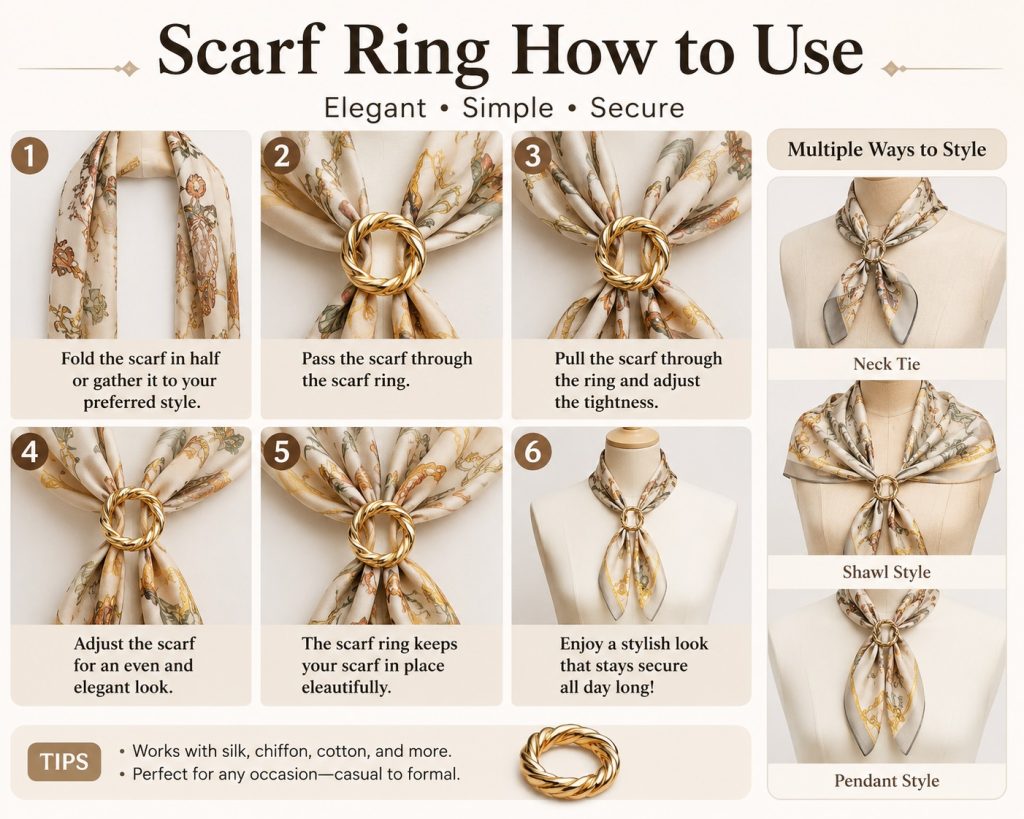
Now that you understand what a scarf ring is and why it has become such a popular accessory, it’s time to learn the basics. For many first-time users, the idea of styling a scarf with a ring may seem complicated. Fortunately, mastering how to use scarf ring for beginners is much easier than learning traditional scarf knots. With just a few simple techniques, you can create polished and fashionable looks in less than a minute.
The first step is choosing the right scarf. Lightweight materials such as silk, satin, chiffon, and soft cotton work especially well because they slide smoothly through the ring. While thicker scarves can also be used, beginners often find that lighter fabrics are easier to adjust and position.
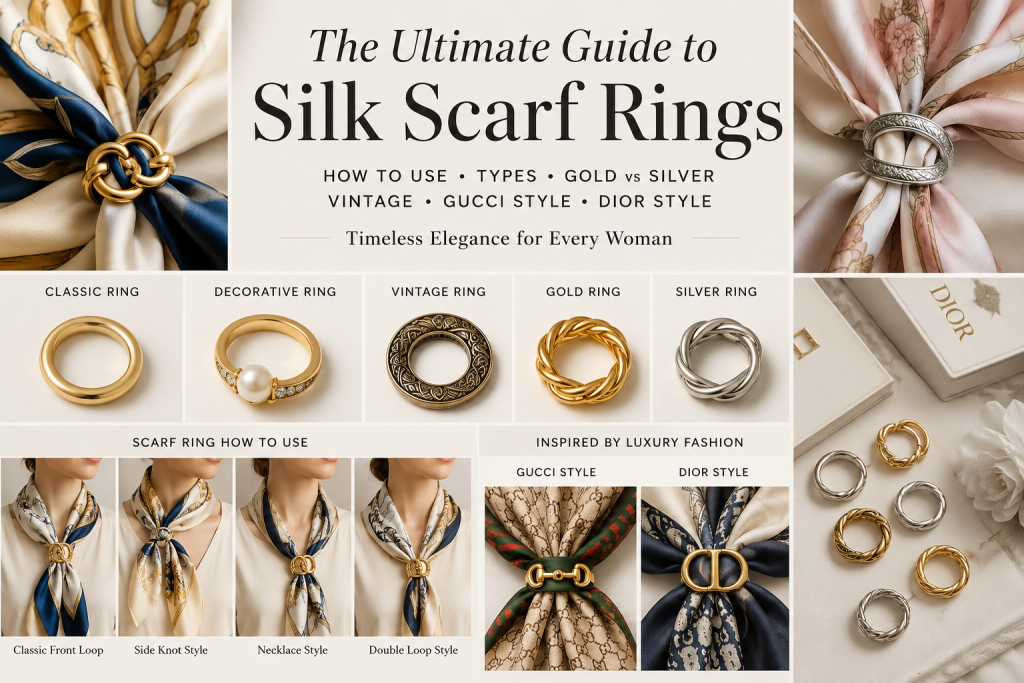
A classic beginner method involves folding a square scarf diagonally into a triangle and then rolling it into a long band. Place the scarf around your neck so that both ends hang evenly in front. Thread both ends through the scarf ring and slide the ring upward until it reaches your desired position. Instantly, you have a clean, symmetrical style that looks far more sophisticated than a simple knot.
Another easy technique is the side-drape style. After threading both scarf ends through the ring, move the ring slightly toward one shoulder rather than keeping it centered. This creates an asymmetrical look that feels modern and relaxed. It is an excellent option for casual outfits and works particularly well with floral or patterned scarves.
Many beginners make the mistake of pulling the scarf too tightly. A scarf ring is designed to create elegant draping rather than tension. Leaving a little looseness around the neck not only feels more comfortable but also creates a more luxurious appearance. The soft folds generated by the ring often become the most attractive part of the overall look.
Learning how different ring designs affect styling is also useful. Single-loop rings are generally the easiest for beginners because they require minimal adjustment. Double-loop and decorative rings offer more styling possibilities but may take a little practice to master. Starting with a simple ring allows you to focus on understanding how fabric moves and drapes.
If your scarf keeps slipping, don’t worry. This is one of the most common beginner challenges. The solution is usually to choose a ring that matches the scarf’s thickness. A ring that is too large may not provide enough grip, while one that is too small can bunch the fabric excessively. Finding the right balance will make styling much easier.
Another beginner-friendly approach is to use the scarf ring as a substitute for a necklace. Position the ring at the center of the chest and allow the scarf to drape naturally around it. This creates an elegant focal point and works beautifully with simple tops, dresses, and blouses. Many people discover that this method instantly upgrades even the most basic outfit.
As your confidence grows, you’ll begin experimenting with different placements, scarf lengths, and ring designs. The beauty of scarf rings lies in their flexibility—there is no single “correct” way to wear them. Small adjustments can create dramatically different looks, allowing one scarf to feel like several different accessories.
Women Scarf Ring How to Use: Elegant Styling Ideas
After mastering the basic techniques, many people begin exploring more creative ways to wear scarf rings. For women in particular, a scarf ring can serve as both a practical accessory and a fashion statement. Understanding women scarf ring how to use opens up countless styling possibilities that can transform simple outfits into polished, sophisticated looks.
One of the most popular approaches is the classic center-front style. Start by folding your scarf into a long band and draping it around your neck. Pull both ends through the scarf ring and position the ring at the center of your chest. This creates a balanced and elegant appearance that pairs beautifully with blouses, sweaters, and tailored jackets. The look is timeless and suitable for both professional and social settings.
For a softer and more feminine effect, try positioning the ring slightly off-center. Moving the scarf ring toward one shoulder creates graceful asymmetry and allows the scarf to flow naturally. This technique works especially well with silk scarves featuring floral prints, watercolor patterns, or vibrant seasonal colors. The resulting drape adds movement and visual interest without appearing overly formal.
Women often use scarf rings to enhance V-neck tops and dresses. Instead of allowing the scarf to hang loosely, gather the ends through a decorative ring and adjust the fabric so it frames the neckline. This technique helps fill open necklines while adding texture and sophistication. It is particularly useful during transitional seasons when you want a lightweight accessory rather than a heavy jacket.
Another stylish option is the choker-inspired look. Fold a small silk scarf into a narrow strip, wrap it around your neck, and secure the ends with a scarf ring positioned at the front or side. The result resembles a statement necklace while offering the softness and elegance of fabric. This style has become increasingly popular because it combines vintage charm with modern fashion trends.
Scarves and rings can also be used to add color to monochromatic outfits. Imagine a simple black dress paired with a brightly colored silk scarf and a polished metallic ring. The scarf immediately becomes the focal point of the ensemble, creating contrast without overwhelming the overall look. This styling technique is frequently used by fashion professionals because it requires minimal effort while producing maximum visual impact.
For business attire, a scarf ring can create a refined appearance without looking overly decorative. Neutral-toned scarves paired with silver or gold rings complement blazers, tailored trousers, and pencil skirts. The accessory introduces personality while maintaining a professional image, making it ideal for office environments and formal meetings.
Women who enjoy layering can also incorporate scarf rings into outerwear styling. During cooler months, a scarf ring helps keep scarves neatly in place over coats and jackets. Rather than repeatedly adjusting a traditional knot, the ring secures the fabric while preserving a clean silhouette. This practical benefit is one reason scarf rings remain popular among frequent travelers and busy professionals.
Accessories can be coordinated for an even more cohesive look. Matching a gold scarf ring with gold earrings, bracelets, or handbag hardware creates visual harmony throughout an outfit. Likewise, silver rings pair beautifully with cooler color palettes and contemporary fashion styles. These small details often make an outfit appear more thoughtfully curated.
Perhaps the greatest advantage of scarf rings for women is their versatility. The same scarf can look completely different depending on where the ring is placed and how the fabric is arranged. By experimenting with various drapes, lengths, and ring designs, women can create dozens of unique looks from just a few accessories.
Silk Scarf Ring How to Use Without Damaging Delicate Fabrics
Among all scarf materials, silk is often considered the most elegant and luxurious. Its smooth texture, natural sheen, and lightweight feel make it the perfect companion for a scarf ring. However, many people hesitate to experiment because they worry about damaging delicate fabric. Understanding silk scarf ring how to use properly allows you to enjoy sophisticated styling while protecting your scarf’s quality for years to come.
The first rule when using a scarf ring with silk is choosing the correct ring size. A ring that is too small can compress the fabric excessively, creating deep creases and making adjustments difficult. Conversely, an oversized ring may fail to hold the scarf securely. Ideally, the scarf should slide through the ring smoothly while still maintaining enough friction to stay in place.
Before styling, it is helpful to fold the silk scarf carefully rather than twisting it aggressively. Sharp twists can create unnecessary stress on the fibers and may leave wrinkles that are difficult to remove. A neat fold allows the fabric to glide effortlessly through the ring and produces cleaner, more refined draping.
One of the easiest silk scarf styles involves folding a square scarf diagonally and rolling it into a long band. Drape it around your neck and pull both ends through the scarf ring. Once the ring is positioned, gently spread the fabric around it to create soft folds. This technique highlights the natural flow of silk and creates a luxurious appearance without requiring complicated adjustments.
Another elegant method is the waterfall drape. Instead of pulling both ends evenly through the ring, allow one side of the scarf to remain slightly longer than the other. The difference in length creates cascading folds that showcase the movement and shine of silk. This style works particularly well with large square scarves and artistic prints.
When working with premium silk scarves, avoid rings that have rough edges, sharp decorative elements, or unfinished metal surfaces. Even minor imperfections can snag delicate threads over time. High-quality scarf rings are designed with smooth interiors that allow silk to move freely without abrasion.
Many fashion enthusiasts also use scarf rings to display printed designs more effectively. Traditional knots often hide large portions of a scarf’s artwork, but a scarf ring requires less fabric gathering. As a result, signature patterns, hand-painted motifs, and intricate borders remain visible. This is one reason luxury silk scarves pair so naturally with scarf rings.
Storage is equally important. After wearing a silk scarf with a ring, remove the ring before storing the scarf. Leaving the fabric compressed inside the ring for extended periods can create unwanted creases. Instead, fold the scarf gently or store it flat to preserve its shape and texture.
Cleaning habits also influence longevity. If a scarf ring contains cosmetics, perfume residue, or skin oils, wipe it clean before using it again. Keeping both the ring and scarf clean helps maintain the fabric’s appearance and prevents discoloration around frequently styled areas.
Hermes Scarf Ring How to Use Like a Fashion Expert
For many fashion enthusiasts, owning a Hermès scarf ring represents the perfect combination of luxury, craftsmanship, and timeless style. These beautifully designed accessories are created specifically to complement the brand’s famous silk scarves, making them both functional and decorative. Learning Hermes scarf ring how to use can help you achieve the polished, effortless look often associated with luxury fashion.
One reason Hermès scarf rings are so popular is the variety of designs available. From the iconic Regate and Chaine d’Ancre styles to the highly sought-after Mini Mors Twilly Ring, each design offers a unique way to style a scarf. While the rings differ in appearance, the basic principle remains the same: guide the scarf through the opening and adjust the fabric to create structure and elegance.
The classic center-ring style is perhaps the most recognizable Hermès look. Fold a square silk scarf diagonally, roll it into a long band, and place it around your neck. Thread both ends through the scarf ring and slide the ring upward until it sits comfortably near the collarbone. The result is clean, symmetrical, and unmistakably sophisticated. This technique works beautifully with printed silk scarves because it allows much of the design to remain visible.
Many Hermès enthusiasts favor the side-knot effect. Instead of positioning the ring at the center, move it slightly toward one shoulder. This simple adjustment creates a relaxed yet refined appearance that feels less formal while still maintaining a luxurious aesthetic. The style pairs particularly well with blazers, lightweight knitwear, and crisp button-down shirts.
The popular Mini Mors Twilly Ring is designed specifically for narrow Twilly scarves. To create an elegant neck accessory, wrap the Twilly around your neck and secure both ends through the ring. Because the scarf is slimmer than a traditional carré, the ring becomes a more prominent design feature. This styling method is ideal for adding a subtle touch of color and luxury to everyday outfits.
Another signature Hermès-inspired technique involves using a scarf ring to create volume. After threading the scarf through the ring, gently pull sections of fabric outward to form soft folds around the accessory. This creates dimension and highlights the scarf’s texture, making the overall look appear richer and more intentional.
Scarf rings are not limited to neckwear. Hermès stylists often demonstrate creative applications that extend beyond traditional scarf styling. A silk scarf secured with a decorative ring can become a handbag accessory, a wrist embellishment, or even a hair accessory. These alternative uses help maximize the versatility of both the scarf and the ring.
When styling luxury scarves, balance is important. Because Hermès scarves frequently feature bold colors and intricate artwork, it is often best to keep the rest of the outfit relatively simple. Neutral clothing allows the scarf and ring to become the focal point without competing with other statement pieces.
The beauty of Hermès styling lies in its effortless appearance. Rather than creating overly complicated arrangements, most iconic looks rely on clean lines, soft draping, and precise placement. A well-positioned scarf ring can make a simple scarf appear carefully styled while still feeling natural and comfortable.
How to Use a Scarf Ring on a Shirt
Once you’ve mastered traditional neck scarf styling, a scarf ring can become much more than a scarf accessory. Fashion lovers increasingly use scarf rings to enhance shirts and blouses, creating unique looks that combine elegance with practicality. Learning how to use a scarf ring on a shirt allows you to add personality to everyday outfits without investing in an entirely new wardrobe.
One of the simplest methods involves wearing a scarf over a button-down shirt and securing it with a scarf ring at the center of the chest. Start by folding a silk scarf into a narrow band and placing it around your neck beneath the shirt collar. Pull both ends through the ring and adjust the fabric until it sits neatly between the collar points. The finished look resembles a sophisticated cross between a necklace and a necktie.
This styling technique works especially well with white shirts because the neutral background allows colorful scarves to stand out. A vibrant printed scarf paired with a polished metal ring instantly transforms a basic shirt into a refined fashion statement. Whether you’re heading to the office or attending a social event, the combination creates a polished appearance with minimal effort.
For a more relaxed look, leave several top buttons open and position the scarf ring slightly lower on the chest. This creates a softer silhouette and allows the scarf to drape naturally. The result feels modern and effortless while still maintaining a touch of sophistication. Lightweight silk and satin scarves are particularly effective for this style because they create graceful folds around the ring.
Another popular technique is the faux-necklace effect. Instead of wrapping the scarf tightly around the neck, allow it to hang loosely and use the scarf ring as a decorative centerpiece. The ring functions almost like a pendant, drawing attention to the neckline while introducing texture and color. This approach is especially useful when you want the visual impact of statement jewelry without wearing heavy accessories.
Oversized shirts offer additional styling opportunities. By pairing an oversized blouse with a scarf and ring, you can create structure where the garment might otherwise appear loose or shapeless. The scarf introduces vertical lines that elongate the torso, while the ring provides a focal point that balances the overall outfit.
Scarf rings can also help coordinate colors within an ensemble. For example, a navy shirt paired with a silk scarf containing hints of blue, gold, and white can be beautifully complemented by a gold-toned ring. This subtle color harmony makes the outfit appear more intentional and professionally styled.
Professional settings are another area where scarf rings shine. Unlike large statement necklaces, scarf rings often look refined rather than distracting. A carefully chosen scarf and ring combination can add individuality to office attire while maintaining a polished and business-appropriate appearance.
For those who enjoy experimenting with fashion, scarf rings can even be used to gather excess fabric near the collar or neckline of loose blouses. This creates gentle draping effects that add dimension and visual interest. Such techniques are particularly popular in contemporary fashion because they transform simple garments into unique styling pieces.
How to Use a Scarf Ring on a Dress
A scarf ring can completely change how a dress looks without altering the dress itself. It acts as a styling tool that adds structure, color, and personality. Understanding how to use a scarf ring on a dress is especially useful when you want to elevate a simple outfit into something more refined for events, dinners, or even everyday wear.
One of the most elegant methods is the neckline enhancement style. Take a silk scarf and drape it loosely around your neck over the dress. Thread both ends through a scarf ring and adjust it so the ring sits at the center or slightly off-center of the chest. This creates a soft focal point that draws attention to the neckline and works beautifully with V-neck, scoop-neck, or strapless dresses.
For dresses with a simple or solid color, this technique is particularly powerful. A plain black, white, or beige dress can instantly feel more luxurious when paired with a colorful silk scarf and a metallic ring. The contrast between fabric and accessory creates visual depth without overwhelming the outfit.
Another popular approach is the waist-defining style. Instead of wearing the scarf at the neck, wrap it around the waist like a belt and secure it with a scarf ring at the front or side. This technique helps shape the silhouette and is especially flattering for loose or flowy dresses. The scarf ring acts as both a fastening tool and a decorative centerpiece.
This belt-style use works well for summer dresses, shirt dresses, and even minimalist slip dresses. By adding a scarf ring at the waist, you can break up long vertical lines and create a more structured, hourglass-like shape. It also introduces an opportunity to mix textures and patterns, such as pairing a floral silk scarf with a solid cotton dress.
For more fashion-forward styling, the shoulder drape technique is another creative option. Drape a scarf over one shoulder and secure it with a scarf ring near the collarbone or upper shoulder area. This asymmetrical look feels modern and slightly dramatic, making it ideal for evening events or special occasions. It gives the dress a runway-inspired feel without requiring any permanent changes.
Scarf rings can also be used to transform the back of a dress. By draping a scarf across the shoulders and securing it with a ring toward the back, you can create an unexpected design detail that reveals itself as you move. This works especially well for backless or open-back dresses, where the scarf adds both elegance and coverage.
Another subtle technique is using the scarf ring as a decorative accent rather than a structural element. Simply attach a scarf to a handbag or belt loop while wearing a dress, allowing it to hang naturally as part of the overall outfit. This creates a cohesive styling theme without overcomplicating the look.
When styling dresses, fabric balance is important. Light silk scarves pair best with delicate dresses, while slightly thicker scarves work better with structured fabrics like cotton or linen. The scarf ring helps unify these materials, ensuring the outfit feels intentional rather than mismatched.
Color coordination also plays a key role. A scarf ring in gold or silver can either match jewelry or contrast with it, depending on the desired effect. Neutral dresses allow for bold scarf choices, while patterned dresses often benefit from simpler, monochromatic scarves.
Men Scarf Ring How to Use for Modern Style
Scarf rings are often seen as a women’s accessory, but modern menswear has fully embraced scarves as part of refined, masculine styling. Understanding men scarf ring how to use opens the door to a more polished, intentional wardrobe—especially for smart casual, business casual, and even formal outfits where subtle details matter.
One of the most classic men’s approaches is the clean neck wrap. Take a silk or lightweight wool scarf, fold it into a long strip, and drape it evenly around the neck. Thread both ends through a simple metal scarf ring and adjust it so the ring sits centered at the upper chest. The result is minimal, structured, and similar in spirit to a modern necktie, but softer and more relaxed.
This style works particularly well with tailored pieces such as blazers, trench coats, and overcoats. A neutral scarf in navy, grey, or black paired with a silver or gunmetal ring creates a sophisticated look without drawing too much attention. It’s subtle, but it elevates the entire outfit.
For a more relaxed aesthetic, men can shift the scarf ring slightly to one side instead of keeping it centered. This asymmetrical placement adds personality without breaking the clean lines of the outfit. It pairs especially well with open-collar shirts or lightweight jackets, where the goal is to look effortless rather than overly formal.
Another practical use is integrating a scarf ring with outerwear. During colder months, scarves often become bulky or uneven when tied. A scarf ring keeps everything in place while maintaining a streamlined silhouette. Instead of a heavy knot under a coat, the ring creates a controlled drape that sits neatly against the chest.
Men who prefer minimalist fashion often use scarf rings as a functional alternative to traditional knots. This is especially useful for travel or long days out, where constant adjustment of a scarf can become inconvenient. Once secured, the scarf ring keeps the fabric stable while still allowing natural movement.
In more fashion-forward styling, scarves can be used as statement pieces. A patterned silk scarf—such as geometric prints or subtle paisley—secured with a ring can become the focal point of an outfit. In this case, the rest of the clothing should remain simple to balance the visual impact.
Scarf rings also work well in layered outfits. For example, a man wearing a shirt, lightweight sweater, and jacket can use a scarf ring to prevent the scarf from shifting between layers. This keeps the outfit structured and avoids unnecessary bulk around the neck area.
Material choice is especially important for men’s styling. Metal rings in brushed silver, matte black, or dark bronze tend to work best because they complement masculine tones and textures. Avoid overly decorative rings unless the rest of the outfit is intentionally fashion-driven.
Another understated but effective use is the short drape style. Instead of long hanging ends, the scarf is pulled only slightly through the ring, creating a compact shape near the neck. This works well for urban styling and minimalist wardrobes, where simplicity is key.
Ultimately, scarf rings give men a way to wear scarves without the unpredictability of knots. They provide structure, consistency, and a refined aesthetic that fits seamlessly into modern fashion.
People also ask
- Types of Scarf Rings: A Complete Guide to Women’s Scarf Rings, Slides, Vintage Designs & Styling Techniques
- Luxury Scarf Ring Guide: Hermes, Chanel, Dior & the Best Designer Scarf Rings for Elegant Styling
- Scarf Ring Meaning: Symbolism, Styles, and How to Use a Scarf Ring for Women and Men
- Scarf Ring for Men: Styling Guide, Materials, and Modern Ways to Wear It